Kingdom of the Incas
Stepping into the world of the Incas is like journeying into a realm where the mountains themselves breathe history. You are about to embark on an exploration of one of the most sophisticated and enigmatic empires the Americas have ever known. Prepare to have your understanding of ancient civilizations not just expanded, but truly redefined.
Imagine, if you will, the rugged majesty of the Andes, a landscape that both nurtures and challenges. It is in this awe-inspiring setting that your story, the story of the Incan Empire, truly begins.
Mythical Beginnings: The Sun’s Chosen People
You’ll often encounter tales of the Incan genesis, stories woven from the very fabric of the cosmos. According to legend, Inti, the Sun God, sent his children, Manco Cápac and Mama Ocllo, to establish a sacred city. You can picture them, rising from the waters of Lake Titicaca, bearing a golden staff, tasked with finding the fertile land where it would sink into the earth. This sacred spot, you know now, became Cusco, the imperial capital. This foundational myth wasn’t just a story; it was a blueprint for your destiny as an Incan ruler, instilling a divine right to govern and a connection to the very source of life – the sun. You, as an Incan, understood your lineage to be direct, your purpose manifest.
The Rise of Cusco: A Humble Beginning
Before it became the glittering heart of an empire, Cusco was merely one of many settlements, albeit strategically located in the fertile Cusco Valley. You would have seen it as a burgeoning city, growing through a combination of astute alliances and carefully executed conquests. Early Incan leaders weren’t initially focused on vast imperial ambitions, but rather on securing their immediate surroundings, ensuring fertile land and reliable resources for their people. You were, in essence, a regional power before you became a continental force. This period laid the groundwork for the monumental expansion that would follow, consolidating power and developing the sophisticated administrative techniques that would become your hallmark. You learned to integrate, to manage, and to command.
The Pachacuti Era: Forging an Empire
The turning point, the moment when the Incan Empire truly burst onto the historical stage, came with the reign of Pachacuti. You will encounter his name frequently, and for good reason. Before his time, your kingdom was under threat from the Chanca, a formidable rival. Imagine the tension, the fear, as the Chanca armies pressed closer to Cusco. It was Pachacuti, then a lesser prince, who rallied the defenses and, through a combination of military genius and sheer determination, repelled the invaders. This victory wasn’t just a win; it was a declaration.
Following this triumph, Pachacuti (whose name means “He who overturns the Earth”) embarked on an unprecedented campaign of expansion. You would have witnessed the dramatic transformation of your society as your armies, disciplined and well-supplied, marched across the challenging Andean terrain. His strategies were not solely military; they involved diplomacy, infrastructure development, and an ingenious system of tribute and integration. You weren’t just conquering; you were absorbing, building, and unifying. This era established the four suyus, or quarters, of the empire, creating an administrative structure that allowed you to govern vast territories with remarkable efficiency. You were no longer just a king in a valley; you were the Sapa Inca, the sole ruler of an empire stretching thousands of miles.
The Architectonic Wonders: Crafting a Mountain Empire
When you think of the Incas, you inevitably visualize the stunning stone cities, the intricate terraces, and the formidable fortresses that speak volumes about your engineering prowess. These weren’t just buildings; they were statements of your power, your devotion, and your understanding of the natural world.
Mastering Stone: Precision and Endurance
You, as an Incan builder, possessed a mastery of stonework that continues to astound modern engineers. Forget mortar; your structures are characterized by precisely cut, interlocking stones, shaped with such exactitude that a knife blade cannot be inserted between them. You understood the seismic activity of the Andes, and your construction techniques, with their subtly curved walls and trapezoidal openings, made your buildings remarkably resistant to earthquakes. You didn’t just build, you engineered with foresight, ensuring your creations would endure for centuries.
Consider the precision required to quarry immense stones from distant sites, transport them across treacherous terrain, and then meticulously shape them. You didn’t have iron tools; you relied on harder stones, levers, and immense collective effort. Witnessing your ancestors at work would have been a testament to human ingenuity and communal labor. You left behind a legacy that continues to baffle and inspire.
Machu Picchu: The Lost City Revealed
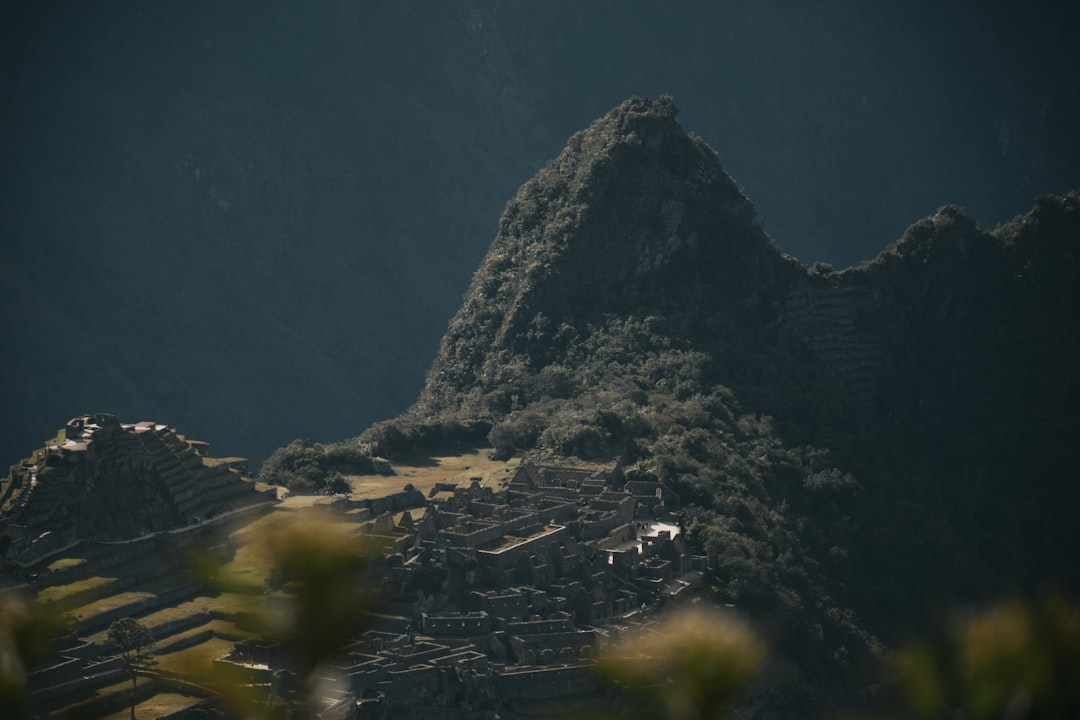
Of all your architectural achievements, none captures the imagination quite like Machu Picchu. Perched dramatically amidst jade-green peaks, shrouded in mists, it offers a breathtaking glimpse into your civilization. You can almost feel the whispers of the past as you walk its ancient paths. This remarkable citadel, likely built as an estate for Pachacuti, showcases the pinnacle of Incan planning and integration with the natural environment.
You’ll observe the distinct sectors: agricultural terraces carved into the steep slopes, providing sustenance; residential areas, where you and your people lived; and religious zones, where sacred rituals were performed. The precise alignment of structures with celestial events, such as the solstices, reveals your deep understanding of astronomy and your profound connection to the cosmos. You engineered not just a city, but a living, breathing testament to your spiritual and scientific wisdom.
Ollantaytambo and Sacsayhuamán: Fortresses of Faith and Power
Beyond Machu Picchu, you will discover other awe-inspiring sites that highlight your empire’s might. Ollantaytambo, with its massive terraces and formidable fortress, served as a royal estate and a critical military outpost. Imagine yourself defending this strategic valley, the immense stone walls providing an impenetrable barrier. The sheer scale of the stone blocks used here, some weighing many tons, underscores the monumental ambition of your engineering projects.
And then there is Sacsayhuamán, overlooking Cusco. You will stand in awe of its cyclopean walls, composed of gigantic, irregularly shaped stones fitted together with astounding precision. It served as a fortress, a temple, and a ceremonial complex, its zig-zagging ramparts an imposing symbol of your imperial power. You built these structures not just for defense, but as declarations of your dominion over the land and your divine connection to the gods.
The Incan Social Structure: A Hierarchical Harmony
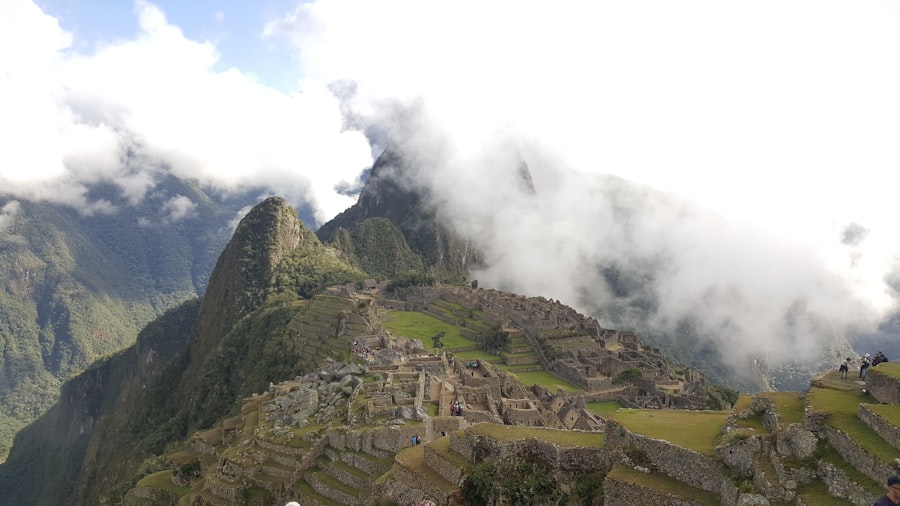
Your empire was not just built on stone, but on a meticulously organized social pyramid, a system that ensured order, productivity, and a sense of collective purpose. Everyone had a place, and every place had a function.
The Sapa Inca: God-King and Absolute Ruler
At the apex of your society stood the Sapa Inca, the divine emperor, considered a direct descendant of Inti, the Sun God. You would have revered him as a living deity, his word absolute law. His authority was unquestioned, his decisions binding, and his presence a sacred event. Imagine the elaborate rituals, the opulent attire, and the absolute deference shown to the Sapa Inca. He was not just a ruler; he was the spiritual and secular anchor of your entire civilization.
Beneath the Sapa Inca was the Coya, his principal wife, often also his sister, embodying the duality and balance central to your worldview. This lineage ensured the purity of the royal bloodline and symbolically reinforced the celestial origins of your ruling family. You understood that the stability of your empire rested on the divine legitimacy of your leader.
The Royal Panaca: Bloodline and Bureaucracy
Following the Sapa Inca and Coya were the Royal Panaca, the extended royal families. These were powerful clans, each descended from a former Sapa Inca. They formed the elite governing class, providing administrators, military commanders, and priests. You, as a member of the nobility, would have belonged to one of these panacas, enjoying privileges but also bearing significant responsibilities.
This system ensured continuity and distributed administrative duties across a trusted network. Members of the panaca were responsible for maintaining the mummified bodies of past Sapa Incas, celebrating their memory, and safeguarding their property, which continued to generate wealth even after their death. You understood that even in death, your ancestors held sway.
The Curacas: Local Leaders and Imperial Representatives
To govern your vast empire effectively, you relied on a sophisticated system of local administration. The curacas were local leaders who often retained their positions after their territories were incorporated into the Incan Empire. You, as an Incan administrator, would have worked closely with these curacas, integrating them into the imperial structure while allowing them to maintain a degree of local autonomy.
The curacas were responsible for collecting tribute, organizing labor for public works (the mita system), and maintaining order within their communities. In return, you provided security, infrastructure, and access to the imperial redistribution system. This pragmatic approach to governance helped maintain stability and minimize resistance, showing your capacity not just for conquest, but also for intelligent integration.
The Ayllu: The Foundation of Society
At the base of your social pyramid was the ayllu, the fundamental unit of Incan society. This was a kinship group, a collective of families living and working together, sharing land, resources, and labor. You would have been part of an ayllu, and your identity and security were deeply rooted in this communal structure.
The ayllu operated on principles of reciprocity (ayni) and shared labor (minka). You helped your neighbors, and they helped you. Land was held communally by the ayllu, though allocated for individual family use, and a portion was designated for the Sapa Inca and the state religion. This system ensured that everyone had access to resources and that no one was left behind, embodying a profound sense of collective responsibility and mutual support. You understood that the strength of the empire stemmed from the well-being and cooperation of its smallest units.
The Quipu and the Road System: Networks of Communication and Control
Your empire spanned an enormous and diverse geographical area, presenting formidable challenges for communication and administration. Yet, you overcame these obstacles through ingenious innovations, creating a sophisticated network that bound your vast territories together.
The Qhapaq Ñan: The Royal Road
Imagine a network of roads stretching over 40,000 kilometers, connecting disparate regions from the arid coast to the towering peaks, from dense jungles to high-altitude plains. This is the Qhapaq Ñan, the Incan Royal Road system, a monumental achievement in engineering and logistics. You would have marveled at its construction, with sections carefully paved, stepped, tunneled, and bridged, all adapted to the challenging Andean topography.
This road system wasn’t just for travel; it was the circulatory system of your empire. It facilitated troop movements, the transport of goods, and the swift dissemination of information. You understood that effective communication was paramount to maintaining control over such a sprawling domain. The Qhapaq Ñan symbolizes your capacity for grand vision and meticulous execution.
Chasquis: The Imperial Runners
Along the Qhapaq Ñan, you would have encountered the chasquis, highly trained relay runners who carried messages and small packages across the empire. Stations were strategically placed along the roads, allowing chasquis to run at incredible speeds for short distances before passing their burdens to the next runner. Imagine the sheer athleticism and dedication of these individuals, ensuring that your emperor’s decrees could travel thousands of miles in a matter of days.
The chasquis were the living embodiment of your communication network, ensuring that the Sapa Inca remained informed and that commands were swiftly relayed across the empire. You developed a system that rivaled, and perhaps even surpassed, the efficiency of contemporary European communication in similar terrains.
Quipu: The Knotted Record Keepers
One of the most enigmatic and fascinating aspects of your civilization is the quipu. These complex arrangements of knotted strings served as your primary method of record-keeping and possibly even as a form of non-phonetic writing. You would have seen quipucamayocs, specially trained officials, meticulously creating and interpreting these intricate devices.
While some quipus clearly recorded numerical data – census figures, tribute amounts, storehouse inventories – others are believed to have preserved historical narratives, myths, and laws. The exact mechanism of how the narrative quipus were “read” remains one of the great unsolved mysteries of archaeology. You developed a system of information storage that was both highly portable and remarkably complex, a testament to your distinct intellectual achievements.
The Incan Cosmology and Religion: A Spiritual Landscape
Your world was imbued with spiritual significance. Every mountain, every river, every celestial body held a place in your cosmology, and your daily life was interwoven with rituals and beliefs designed to maintain harmony with the divine forces.
Viracocha, Inti, and Pachamama: The Principal Deities
At the heart of your religious beliefs was Viracocha, the creator god, who brought forth the earth, sky, and humanity. You acknowledged his ultimate power, but your most immediate and revered deity was Inti, the Sun God. As the Sapa Inca, you were his direct descendant, making Inti not just a cosmic force but also the divine patron of your imperial lineage. His worship was central to state religion, and elaborate festivals and sacrifices were dedicated to him.
Pachamama, the Earth Mother, was equally vital to your spiritual life. You understood that the land provided sustenance, and you honored her with offerings and rituals, seeking her blessings for fertile harvests. You recognized the profound interdependence between humanity and the natural world, a relationship you meticulously cultivated through spiritual observances.
Huacas: Sacred Sites and Objects
The Incan landscape was dotted with huacas, sacred places or objects imbued with spiritual power. These could be natural features like mountains, rivers, springs, and strangely shaped rocks, or man-made structures like temples, tombs, and even the mummified remains of ancestors. You perceived the sacred in the very fabric of your environment.
Each huaca had its own particular significance and was the site of specific rituals and offerings. Pilgrimages to important huacas were common, and your civilization’s understanding of its surroundings was deeply intertwined with this spiritual geography. You walked a land teeming with divine presence.
Capac Hucha: The Mummified Ancestors and Child Sacrifices
The reverence for ancestors was a cornerstone of your faith. The mummified bodies of past Sapa Incas were not simply preserved; they were treated as living entities, attended by their Panaca, brought out for ceremonies, and even consulted for advice. You believed that your ancestors continued to play an active role in the affairs of the living.
In times of extreme crisis or for particularly important state rituals, you practiced capac hucha, the sacrifice of carefully selected children. These sacrifices were considered the highest offering, a pristine gift to the gods, particularly Inti, to appease them or to ensure the well-being of the empire. While profoundly disturbing to modern sensibilities, you understood it as a necessary act of profound religious devotion to maintain cosmic balance. You sought to give the ultimate, purest offering to the divine.