
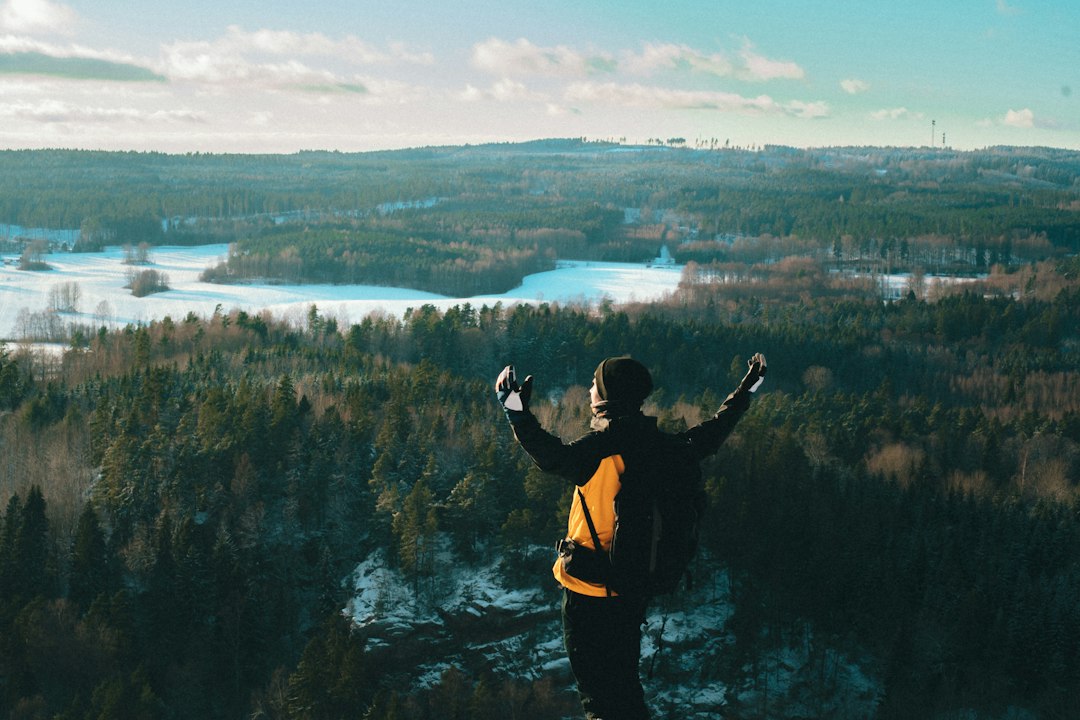
How Adventure Can Help You Build Confidence and Overcome Fear
Embracing the Unknown: Your Gateway to Self-Belief
You’ve felt it before, that little whisper of doubt, the tremor in your hands when faced with something new and potentially challenging. It’s a universal human experience, this dance with fear and the desire for confidence. Yet, within you lies an innate capacity for growth, a deep wellspring of resilience waiting to be tapped. One of the most potent, exhilarating, and surprisingly effective ways to access this inner strength is through adventure. When you step outside your comfort zone, when you intentionally seek out experiences that push your boundaries, you aren’t just creating memories; you’re actively constructing a more confident, capable version of yourself. This isn’t about reckless abandon; it’s about calculated risks, intentional exploration, and the profound self-discovery that emerges when you face the unknown head-on. Adventure, in its myriad forms, serves as a powerful crucible, forging resilience, sharpening your problem-solving skills, and ultimately, dissolving the shadows of fear that often hold you back.
The Defining Nature of Adventure for You
What exactly constitutes “adventure” for you? It’s crucial to understand that adventure isn’t solely reserved for scaling Everest or trekking through the Amazon rainforest. While those are undeniably epic, your personal adventure can be far more accessible. It’s any experience that deviates from your routine, presents a challenge, and requires you to adapt and grow. For one person, it might be solo backpacking through a foreign country, navigating unfamiliar languages and cultures. For another, it could be trying a new extreme sport like rock climbing or white-water rafting. Perhaps for you, adventure begins with simply taking a challenging photography course, performing at an open mic night, or even embarking on a demanding new project at work that stretches your current skillset. The key isn’t the grandeur of the activity, but the psychological impact it has on you. Does it make your heart pound a little faster? Does it introduce an element of uncertainty? Does it demand you learn something new or push past a perceived limitation? If so, you’re on the right track. Your adventure is personal, scaled to your current comfort levels, and designed to gradually expand them.
Confronting Your Inner Narrative of Limitation
Before you even step out the door, much of your journey in building confidence through adventure involves confronting the stories you tell yourself. You might hear voices of doubt, “I’m not strong enough,” “I’ll definitely fail,” or “It’s too dangerous.” These narratives are powerful, but they are not necessarily true. Adventure provides a direct, experiential challenge to these ingrained beliefs, allowing you to rewrite your internal script.
Exploring the transformative power of adventure, the article “How Adventure Can Help You Build Confidence and Overcome Fear” highlights the significant role that stepping outside of your comfort zone plays in personal growth. For those interested in further enhancing their self-esteem through unique experiences, you might find valuable insights in a related article on the importance of self-care and personal grooming, which can also contribute to building confidence. You can read more about it here: Self-Care and Confidence.
The Transformative Power of Stepping Outside Your Comfort Zone

Your comfort zone is a beautiful, safe place, but nothing truly remarkable ever grows there. It’s a psychological bubble where predictability reigns, and the potential for growth stagnates. To genuinely build confidence and overcome fear, you must intentionally and repeatedly venture beyond its familiar boundaries. This isn’t about leaping into the abyss; it’s about taking measured, progressive steps into the unknown, each one expanding your capacity and reinforcing your belief in your own abilities. Think of it as stretching a muscle – gentle at first, then gradually increasing the intensity. Every time you successfully navigate a new challenge, no matter how small, you’re depositing a powerful memory of competence into your mental bank.
Rewiring Your Brain for Resilience
When you engage in adventurous activities, your brain undergoes significant changes. You’re not just having fun; you’re actively rewiring neural pathways. Facing challenges, even minor ones, stimulates the production of neurochemicals like dopamine and endorphins, which are associated with pleasure and reward. More importantly, when you overcome a difficult situation, your brain registers this success, strengthening the neural connections associated with problem-solving and resilience. This means that with each adventure, you become more adept at handling future stressors and uncertainties, not just physically, but mentally and emotionally. Your ability to adapt and think on your feet improves dramatically, translating into greater confidence in all areas of your life.
The Art of Incremental Challenges
You don’t need to sign up for a skydiving course next week. The path to confidence through adventure is often best traversed through incremental challenges. Start small. If you’re afraid of heights, perhaps try a gentle hiking trail with a modest incline and a view. Once you’re comfortable there, consider a slightly more challenging path, or a walk across a footbridge. If public speaking terrifies you, start by offering an opinion in a small meeting, then perhaps volunteering to lead a short segment, eventually working up to a full presentation. Each successful step builds on the last, creating a solid foundation of experience and reinforcing your belief that you can do hard things. This gradual approach allows you to consistently experience success, which is the most powerful antidote to fear and doubt.
Learning to Thrive in Uncertainty
Life is inherently uncertain, and much of your fear stems from a desire for absolute control. Adventure, by its very nature, introduces elements of unpredictability. Whether it’s unexpected weather during a hike, a forgotten piece of gear during a camping trip, or a communication barrier in a foreign land, adventures consistently present scenarios that force you to adapt. You learn to improvise, to problem-solve on the fly, and to make decisions with incomplete information. This training in uncertainty is invaluable. It teaches you that even when things don’t go according to plan, you possess the inner resources to navigate them successfully. This newfound ability to thrive amidst ambiguity is a cornerstone of genuine confidence, extending far beyond the realm of traditional adventure. You stop fearing the unexpected and start seeing it as an opportunity to demonstrate your resourcefulness.
Developing Practical Skills and Resourcefulness

One of the most tangible benefits you’ll gain from embracing adventure is the acquisition of practical skills and an enhanced sense of resourcefulness. These aren’t just “adventure skills”; they are life skills that translate directly into increased confidence in your everyday existence. When you know you can fix a problem, navigate a difficult situation, or simply figure things out, your self-belief skyrockets.
Mastering New Abilities
Every adventure presents an opportunity to learn something new. Whether it’s learning to read a map and compass on a wilderness trek, mastering the basics of kayaking, understanding how to set up a tent, or even learning a few key phrases in a new language, these new abilities are powerful confidence boosters. You move from a state of “I can’t” to “I can,” expanding your personal toolkit and proving to yourself that you are capable of acquiring new competencies. The process of learning itself, with its inevitable challenges and triumphs, builds resilience and patience. You learn that persistence pays off, and that competence is a result of consistent effort and practice.
Problem-Solving Under Pressure
Adventures rarely go exactly as planned, and that’s precisely where much of their value lies. You might encounter a broken piece of equipment, a sudden change in weather, a wrong turn, or an unexpected obstacle. In these moments, you are forced to think critically, creatively, and often under a degree of pressure. You learn to assess situations, evaluate options, and implement solutions, sometimes with limited resources. This real-world, hands-on problem-solving experience is far more effective than theoretical learning. It hones your ability to remain calm in a crisis, to trust your instincts, and to find innovative ways to overcome hurdles. This improved capacity for effective problem-solving spills over into your professional and personal life, giving you a greater sense of control and confidence when facing daily challenges. You become someone who actively seeks solutions rather than being paralyzed by problems.
Building Self-Reliance and Independence
When you embark on an adventure, especially a solo or small-group one, you often find yourself in situations where you are solely responsible for your own well-being and success. You learn to trust your judgment, to rely on your own abilities, and to take initiative. This fosters a profound sense of self-reliance and independence. You discover that you don’t always need to depend on others for guidance or solutions. This isn’t about rejecting help when needed, but about cultivating a strong internal locus of control, a deep-seated belief that you are the primary agent in your own life. This independence is a cornerstone of robust self-confidence, allowing you to pursue your goals with greater conviction and less external validation. You become the hero of your own story, capable of navigating its twists and turns.
The Power of Shared Experiences and Community
While many adventures emphasize personal challenge and self-reliance, the social aspect of shared experiences can be equally transformative for building confidence and overcoming fear. When you embark on an adventure with others, you tap into a collective strength and forge bonds that reinforce your belief in yourself and in your capacity for connection.
Finding Your Tribe and Mutual Support
Joining an adventure group, whether it’s a hiking club, a climbing team, or a travel group, immediately connects you with like-minded individuals. These are people who understand the allure of challenge and the rewards of pushing boundaries. Within such a community, you find mutual support, encouragement, and a safe space to express your fears and celebrate your triumphs. Witnessing others overcome their own challenges can be incredibly inspiring, showing you that your struggles are universal and surmountable. Conversely, your successes become an inspiration to others, reinforcing your value within the group. This shared journey fosters a sense of belonging, which is a fundamental human need and a powerful antidote to feelings of isolation and inadequacy. Knowing you’re part of a supportive community can give you the courage to attempt things you might never try alone.
Learning from Others’ Experiences
Adventure groups provide a rich environment for learning through observation and direct instruction. More experienced adventurers can share valuable tips, techniques, and insights, helping you to avoid common pitfalls and accelerate your learning curve. You can learn about proper gear selection, navigation strategies, safety protocols, and even mental fortitude techniques simply by engaging with those who have more miles under their belt. This mentorship not only equips you with practical knowledge but also builds your confidence by showing you that expertise is attainable and that continuous learning is part of the adventurous spirit. You realize that you don’t have to figure everything out on your own, and that asking for help is a strength, not a weakness.
Celebrating Collective Achievements
There’s a unique joy and satisfaction in achieving a challenging goal as part of a team. Reaching the summit of a mountain together, successfully navigating a difficult river section, or completing a demanding multi-day trek with companions creates a powerful shared memory of accomplishment. This collective success reinforces your personal contribution to the group’s achievement, validating your efforts and building your confidence in your ability to collaborate and contribute. The cheers, high-fives, and shared sense of triumph create a positive feedback loop, associating effort and challenge with profound rewards. These shared victories are not just about the external accomplishment, but about the internal growth that each member experiences together. They cement the belief that you are capable, valuable, and part of something greater than yourself.
Engaging in adventurous activities can significantly boost your confidence and help you confront your fears head-on. For instance, exploring new environments, such as bustling markets, can provide a sense of accomplishment and encourage personal growth. If you’re interested in discovering how different cultures approach adventure and the unique experiences they offer, you might find this article on markets particularly insightful. Embracing these experiences can lead to a more confident and fearless you.
Integrating Adventure into Your Everyday Life
The profound lessons learned and the confidence gained through your adventures don’t have to be confined to distant mountains or exotic locales. The true power of adventure lies in its ability to permeate and enrich every aspect of your daily existence, transforming how you approach challenges and opportunities in your routine life. This integration is crucial for making the shifts in confidence and fear management permanent.
Cultivating an Adventurous Mindset
The most significant takeaway from your adventures is often not the destination reached, but the mindset cultivated along the way. You learn to embrace curiosity, to approach new situations with an open mind, and to view obstacles not as insurmountable barriers, but as puzzles to be solved. This adventurous mindset can be applied to anything: tackling a complex work project, learning a new software program, trying a new recipe, or initiating a difficult conversation. You start asking yourself, “What’s the adventurous way to approach this?” or “How can I make this a journey of discovery?” This shift in perspective transforms mundane tasks into opportunities for growth and self-discovery, infusing your daily life with excitement and purpose. You stop fearing change and start actively seeking it out, recognizing its potential for positive transformation.
Applying Adventure Skills to Daily Challenges
Remember those problem-solving skills you honed when your hiking trail got washed out, or the resilience you developed when your kayak flipped? These aren’t just for the wilderness. You can consciously apply them to your daily life. When faced with a work deadline, you can break it down like a multi-day trek, planning your route and anticipating potential pitfalls. When a personal relationship encounters a rough patch, you can approach it with the same adaptability and communication strategies you’d use to navigate a challenging group expedition. Your ability to assess risks, make decisions under pressure, and improvise solutions becomes a powerful asset in every domain. You gain a practical toolkit for navigating life’s complexities, knowing that you have already proven your capacity to overcome similar, if not greater, challenges in your adventurous pursuits.
Sustaining the Journey of Self-Growth
Confidence isn’t a destination you arrive at; it’s an ongoing journey of growth and self-discovery. The best way to maintain and build upon the confidence you gain from adventure is to make adventure a regular part of your life. This doesn’t mean constantly undertaking extreme expeditions. It means consistently seeking out opportunities, big or small, to step outside your comfort zone, learn something new, and challenge yourself. Schedule regular “mini-adventures” – explore a new part of your city, try a new sport, take a class in an unfamiliar subject. Keep a journal of your adventures, noting not just what you did, but how you felt, what you learned, and how you overcame fear. By intentionally integrating adventure into your life, you create a continuous feedback loop of challenge, growth, and strengthened confidence, ensuring that your journey of becoming a more capable and fearless individual never truly ends. You become an active participant in your own evolution, forever expanding the horizons of what you believe is possible for yourself.