Friendships Vs relationships, how to balance and how to avoid disappointment
You may have reached a point where avoiding disappointing anyone is no longer possible. Sometimes the harder part of relationships is accepting that every choice carries an emotional cost for someone.
Right now you seem to be trying to protect:
- your long-term friendship,
- your new relationship,
- your own integrity,
- and everyone’s feelings simultaneously.
That’s understandable. But when two important relationships have competing needs, trying to keep everybody equally happy can sometimes create more confusion and hurt over time.
A balanced approach might look like this:
- Be honest with yourself first.
- What do you truly want your romantic relationship to become?
- What role do you realistically want this friendship to have going forward?
- Stop framing it as choosing “good person vs bad person.”
- Your friend may be genuine and respectful.
- Your partner’s discomfort may also be valid.
- Two good people can still have conflicting emotional needs.
- Focus on clarity rather than guilt-management.
- If you continue exactly as before with your friend, your partner may feel emotionally unsafe.
- If you abruptly cut off your friend, you may feel resentful or guilty.
- Usually the healthiest path is somewhere between those extremes.
- Consider temporary boundary adjustments while trust grows.
- Not because you’re being controlled,
- but because early relationships often need stronger reassurance and prioritisation.
- Especially after a hurtful situation.
- Communicate proactively to both people.
- Your partner needs reassurance that they matter.
- Your friend may need honesty that some dynamics naturally change when someone enters a serious relationship.
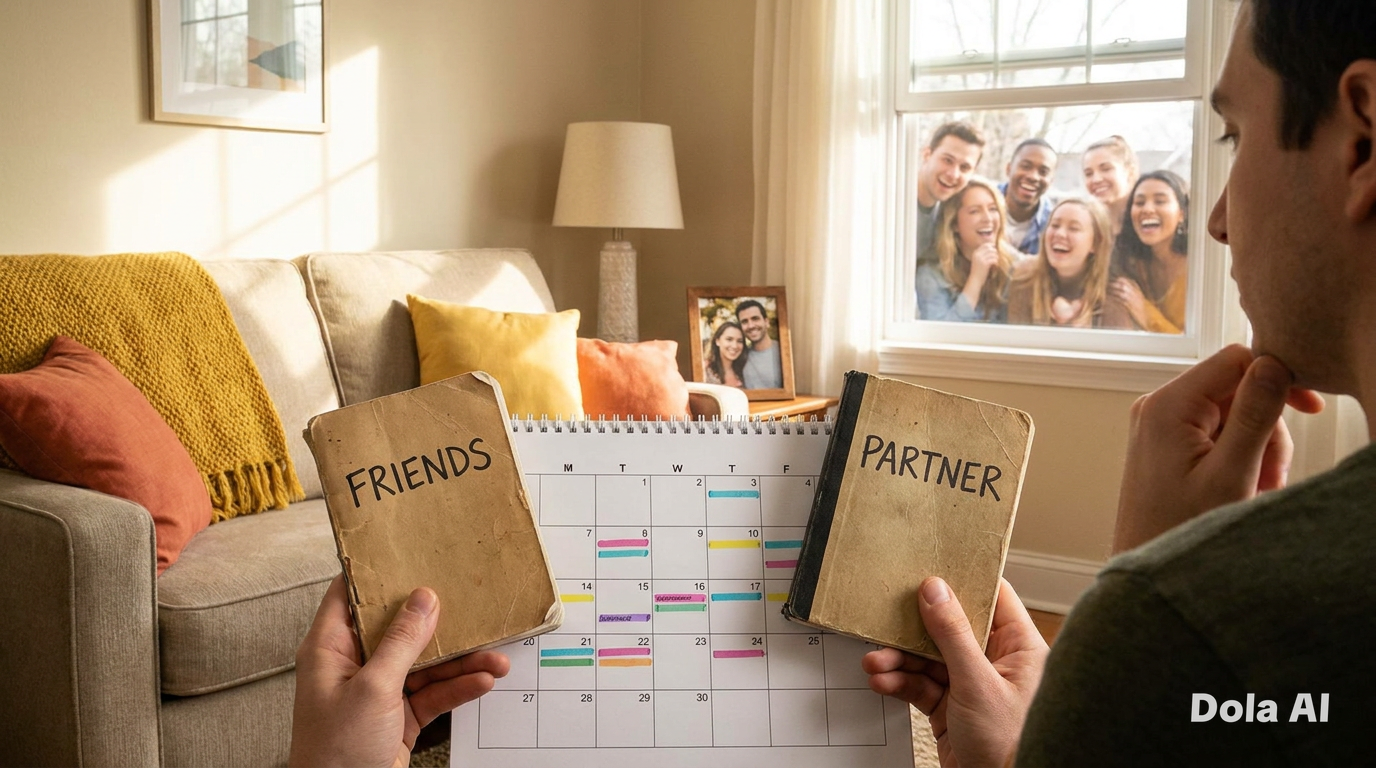
You do not necessarily need to “pick” one person immediately. But you probably do need to decide what boundaries are fair, sustainable, and consistent with the kind of relationship you want to build.
One thing worth remembering:
People are usually more hurt by feeling emotionally secondary than by one isolated event.
If your partner consistently feels they come second to a friendship with someone who loves you, the relationship may struggle regardless of your intentions.
And if your friend truly cares about you, he may ultimately understand the need for some adjustments to protect your relationship — even if that feels disappointing in the short term.